Clinical Trials in Hampton Roads: How to Join a Paid Research Study Near You
If you have ever typed something like paid clinical trials near me into a search bar, you probably felt a little unsure about what actually happens next. You are in good company. Most people who start looking into clinical research around Hampton Roads are doing it for the first time, and they usually have a whole list of reasonable questions they want answered before they pick up the phone. Maybe you came across a flyer somewhere near Newport News. Maybe a coworker mentioned that they took part in a study a while back and had their study-related care handled at no cost. Either way, you are probably wondering whether something like that is available closer to where you live here in Virginia.
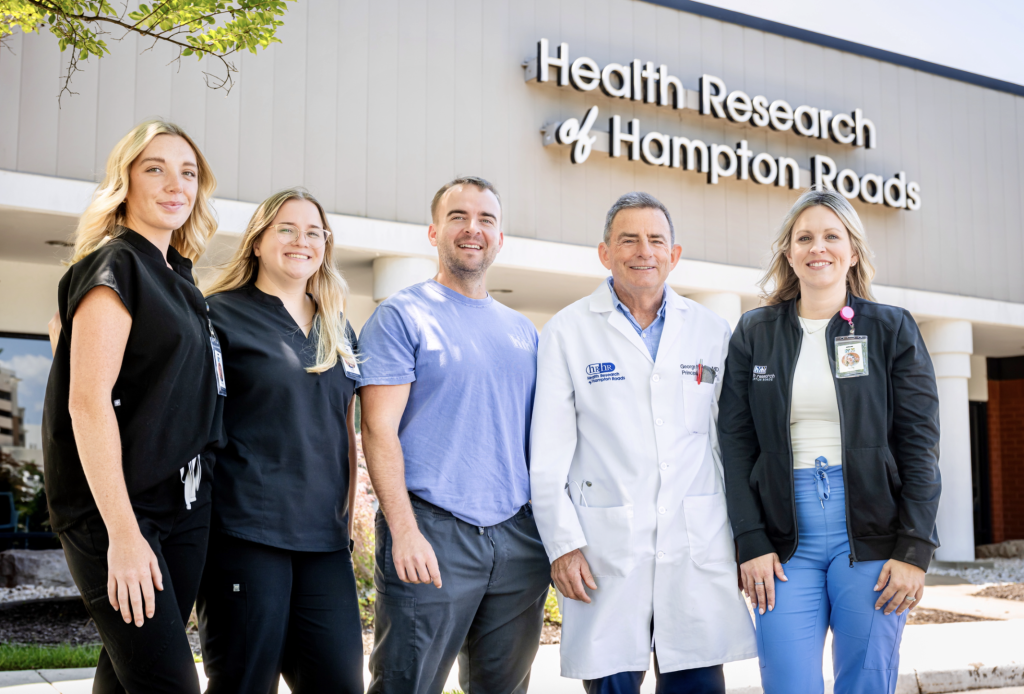
This guide walks you through the whole thing in plain, everyday language. It starts with what a clinical trial really is, moves through who tends to qualify and what the visits look like, and ends with how to reach out if you decide to come in and get screened. Health Research of Hampton Roads, which most folks around here simply call HRHR, is a local clinical research site based in Newport News. We run studies for people living all across the greater Hampton Roads area. Whether you are over in Norfolk, down in Virginia Beach, up around Hampton or Chesapeake, or somewhere in between, the studies we run are meant to sit within a reasonable drive of home. If you would rather skip ahead and see what is enrolling right now, you can head straight to our current trials and check whether you might be a fit. If you want the full picture first, keep reading.
What Is a Clinical Trial, and What Do People Mean by a “Paid Research Study”?
A clinical trial is a carefully organized research study that looks at whether a new treatment, medication, or medical device is safe for people to use and whether it works the way researchers are hoping it will. Before any new medicine can end up on the shelf at your neighborhood pharmacy, it has to move through years of testing with real, everyday volunteers. Those volunteers are the people who quietly make it possible for the rest of us to have better options down the road. Some studies compare a newer treatment against one that doctors already prescribe, just to find out which of the two does the better job. Others test something that is still investigational and has not been approved yet. Often that work focuses on conditions a lot of people in our community live with, things like high cholesterol, diabetes, asthma, migraines, certain skin conditions, and a good number of others.
When you see the phrase paid research study, it usually just means a clinical trial where the people who take part receive some compensation for their time and for the travel it takes to get back and forth to their appointments. That piece tends to get a lot of attention, which is understandable. Still, it helps to know from the start that at HRHR the compensation is there to reimburse you for showing up and staying involved. It is not meant to be a paycheck, and it is not a reason on its own to join something that is not a good fit for your health. Alongside that reimbursement, people who take part generally receive study-related care at no cost, and for a lot of participants that ends up being the part that matters most.
Why People Across Hampton Roads Look Into Clinical Trials Near Them
People decide to look into clinical research studies near them for all kinds of reasons, and no two participants tend to give exactly the same answer when you ask why they first reached out. Some are dealing with a condition that has not responded well to the treatments already available to them. Some want a closer look at their own health from a team of medical professionals. Some simply like the idea of being part of research that could help other people down the road. When you set the reasons side by side, most fall into a handful of buckets:
- Study-related care at no cost. Participants generally receive the exams, testing, and study-related care tied to the trial without paying for it themselves.
- Time with an experienced care team. You have access to board-certified physicians and research professionals whose main job during the study is keeping a close eye on how you are doing.
- A clearer picture of your own health. The screening and monitoring that come with a study often teach people something new about their body or a condition they have been managing.
- Possible access to investigational treatments. Depending on the study, you may have the chance to try a treatment that is not yet widely available to the general public.
- Compensation for time and travel. Many studies reimburse participants for the hours they commit and the miles they drive to and from the site.
- A real contribution to medicine. Every approved treatment on the market today exists because ordinary volunteers were willing to take part in research first.
Those are the things that tend to bring people through the door. It is worth saying plainly that the health reasons and the chance to help move medicine forward are the ones we hope carry the most weight. The compensation is a fair thank-you for your time, not the whole point.
What Kinds of Studies Does HRHR Run in Newport News?
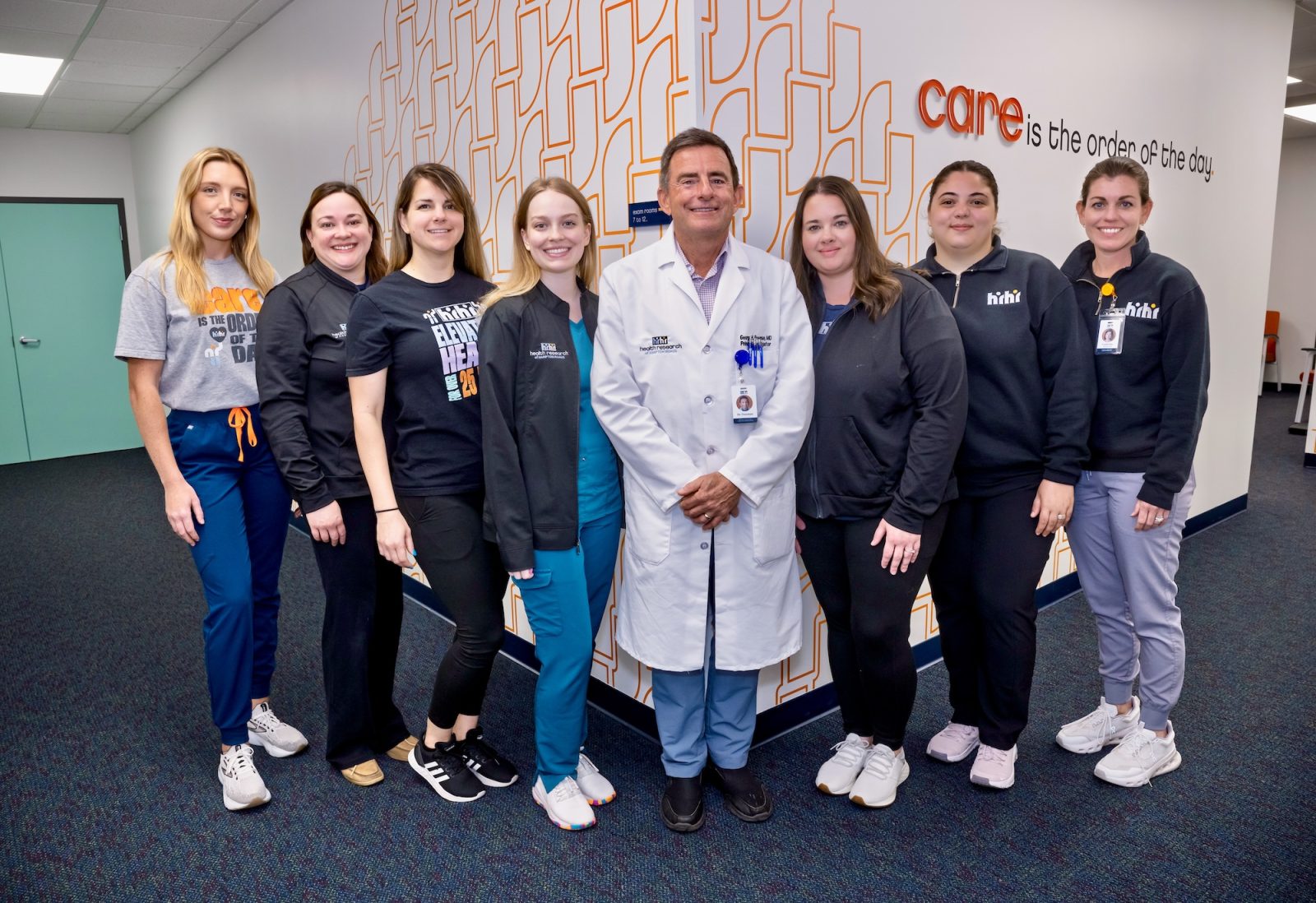
The specific studies open at any given moment change fairly often, since a research site is always finishing up some trials while getting ready to start new ones. The most accurate answer to what is available right now will always be on our current trials page rather than in an article like this one. That said, over the years HRHR has worked across a broad range of therapeutic areas, and the conditions we study tend to reflect the health concerns that are common among adults living across Hampton Roads.
Depending on what happens to be enrolling, that can include research tied to weight management and obesity, cardiovascular concerns such as high cholesterol and high blood pressure, respiratory conditions, migraines, women’s health conditions like overactive bladder and menopause symptoms, skin conditions such as eczema and psoriasis, and vaccine research for older adults. If there is a particular condition you or a family member are dealing with, and you are curious whether we have anything related to it, the simplest thing to do is take a look at our fields of study and our current trials. You can also just call and ask, since a member of the team can tell you what is open far more precisely than a blog post can.
Who Conducts and Oversees Clinical Trials?
Clinical trials are generally sponsored by pharmaceutical companies, the same well-known names you would recognize such as Pfizer, Moderna, and Merck. Biotech firms and research institutions sponsor them too, developing new treatments that need to be tested properly before they can be approved. A local research site like HRHR is where the study actually takes place on the ground. We are the people you meet with, the ones who run your visits, and the team who stays in touch with you throughout, while the sponsor provides the investigational treatment and the detailed protocol that spells out how the study has to be run.
None of this happens without oversight, and that oversight is a big part of why clinical research is safer than a lot of people assume. Every study we run is reviewed and monitored by an Institutional Review Board, usually shortened to IRB. That board is an independent panel of medical professionals, legal experts, and community members, and its whole responsibility is to review the research plan and protect the rights and safety of participants. On top of that, clinical trials in the United States follow guidelines set by the Food and Drug Administration, so the way a study is designed and carried out has to meet standards written specifically to put participant safety first.
How to Join a Paid Clinical Trial Near You, Step by Step
One of the most common reasons people put off reaching out is that they are not sure how to join a clinical trial in the first place. They imagine the process being far more complicated than it turns out to be. In practice, taking part feels a lot like a regular doctor’s visit with a few extra steps built in, and every one of those steps is there to make sure you understand what you are signing up for before anything happens. Here is roughly how it tends to go.
- Find a study and reach out. You can browse our current trials online to see what is enrolling, or you can call or text the team, tell us what you are interested in, and we will point you toward anything that might fit.
- Have a short screening conversation. A research coordinator will explain the study, answer your early questions, and ask some basic questions about your health and medical history to get a sense of whether you might be eligible.
- Go through informed consent. Before anything else happens, you receive a detailed document that lays out the purpose of the study, what would be asked of you, the potential risks, the possible benefits, and your right to leave at any point. You get all the time you need to read it and ask questions.
- Complete a screening visit. If you decide to move forward, a more thorough medical evaluation confirms whether you qualify. This may involve things like blood tests, urine samples, an ECG, or other assessments depending on the study.
- Take part in the study itself. If you qualify, you follow a schedule of in-office visits and follow-ups. During the study you receive either the investigational treatment or, in some cases, a placebo, always under the watch of the physicians and research staff.
- Stay monitored throughout. The care team checks on your progress at each visit and keeps a close eye on your safety for the entire length of the study.
One part of that is worth repeating, because people are sometimes surprised to hear it: you are never locked in. If you change your mind at any point, or decide that taking part is no longer right for you, you have the right to withdraw from the study. You do not have to justify that decision to anyone.

Do Clinical Trials Near You Actually Pay, and How Much?
This is usually the question hovering in the back of people’s minds, even when it is not the first thing they say out loud, so it is worth answering directly. Yes, many clinical trials do offer compensation. That compensation is meant to reimburse you for the time you commit and the travel you take on to keep your appointments. How much a study offers is not a single fixed number. It depends on the specifics of the trial, including how long it runs, how many visits are involved, and what those visits ask of you. A short study with a couple of visits and a longer study with months of follow-up are simply not going to look the same.
Because of that, the honest answer to how much do clinical trials pay is that it varies from study to study. The most reliable way to find out the amount tied to a particular trial is to ask the coordinator about that specific study when you are being screened. It also helps to keep the compensation in perspective alongside everything else you receive, since the study-related care provided at no cost is a real part of the value of taking part, not a footnote. We are glad to be upfront that participants are compensated fairly. At the same time, we would gently encourage anyone considering a study to weigh the health reasons and the chance to contribute to research first, and to treat the payment as a thank-you for your time rather than the reason you sign up.
Are Clinical Trials Safe? Understanding the Risks and the Safeguards
Safety tends to be the single biggest concern people carry with them before they look into research, and it is a fair thing to think carefully about. Every medical treatment, including the ones being studied in a clinical trial, carries some level of risk, and no one at a responsible research site is going to pretend otherwise. What matters is that you are told about those risks clearly and ahead of time. That is exactly what the informed consent process is built to do. The informed consent form spells out the potential side effects, the purpose of the study, how the treatment is thought to work, and your rights as a participant, including your right to walk away whenever you choose.
Beyond that written explanation, the safeguards are structural. The Institutional Review Board reviewing the study, the Food and Drug Administration guidelines the study has to follow, and the physicians and research staff monitoring you at every visit are all there for the same reason, which is to keep your wellbeing at the center of everything. None of the paid research studies at HRHR are run without that kind of ethical oversight. If you ever have a question or a worry during a study, the care team wants you to raise it rather than sit on it.
Who Qualifies for a Clinical Research Study?
Every clinical trial is designed to answer a very specific research question. Because of that, no single study is open to just anyone who happens to be interested. That is not a reflection on you. It is simply how research has to work in order to produce results that mean something. Eligibility usually comes down to a few factors, and the ones that come up most often are your age, your medical history, any medications you are currently taking, and whether you have the specific condition a study is looking at.
In practice, a brief medical evaluation helps determine whether you qualify for a given trial. If it turns out you are not a match for one study, that does not close the door, because you may be a good fit for a different study now or one that opens up later. Plenty of people who did not qualify the first time they reached out ended up taking part in something else down the road. It is usually worth staying in touch and letting the team know you would like to hear about future opportunities.
Clinical Trials in Newport News, Norfolk, Virginia Beach, and Across Hampton Roads
Because HRHR is based right here in Newport News, taking part does not require a long trek across the state or a trip to some far-off medical center. That is one of the practical reasons local research matters to the people who use it. Participants come to us from all over the region, including Norfolk, Virginia Beach, Hampton, Chesapeake, Portsmouth, Suffolk, and the surrounding communities. If you have been searching for clinical trials in Hampton Roads, or for medical research studies near you anywhere in the Newport News and greater Virginia Beach metro area, there is a good chance we are among the closest options you will find.
If you would like to talk to a real person about any of this, the easiest way to get started is to reach out. You can call the team at (757) 591-8100, or if you would rather send a quick text, you can reach us at 757-300-1102. You are also welcome to visit us in Newport News, VA, and you can look through our current trials online any time to see what is enrolling and check whether you might qualify. If nothing happens to be the right fit for you today, you can sign up to stay informed, and we will let you know when new studies open that might match your situation.
Frequently Asked Questions
How can I find paid clinical trials near me in Hampton Roads?
The most direct way is to check the current trials page on the HRHR website to see what is enrolling right now, or to call (757) 591-8100 or text 757-300-1102 and tell the team what you are interested in. Because HRHR is based in Newport News and serves the wider Hampton Roads region, most people in Norfolk, Virginia Beach, Hampton, and the surrounding cities are within a reasonable drive of the site.
Do you get paid for clinical trials?
In many studies, yes. Participants are compensated for their time and for the travel involved in getting to their appointments. The amount depends on the particular study, and it is meant as reimbursement rather than a paycheck, so it is best thought of as a fair thank-you for staying involved rather than the main reason to take part.
How much do clinical trials pay?
There is no single figure, because compensation varies from one study to the next based on how long the trial lasts, how many visits it involves, and what those visits require. When you are being screened for a specific study, the coordinator can tell you exactly what the compensation looks like for that trial.
Which clinical trials pay the most?
Generally speaking, studies that ask more of participants, meaning longer trials with more frequent visits or more involved procedures, tend to offer higher compensation than shorter, simpler ones. Rather than choosing a study based on the payment alone, it is wiser to look for one that genuinely fits your health situation and then ask about the compensation tied to it.
Is it worth doing paid clinical trials?
For a lot of people it is, though the honest answer depends on what you are hoping to get out of it. Participants receive study-related care at no cost, time with an experienced care team, and in some cases access to investigational treatments, along with compensation for their time. Weighing those health benefits against the commitment the study asks of you is the best way to decide whether it is worth it for your own circumstances.
Is it safe to join a clinical trial?
Clinical trials carry some risk, as all medical treatments do, but they are conducted under significant oversight. Every study is reviewed by an Institutional Review Board, follows Food and Drug Administration guidelines, and is monitored by physicians and research staff. The informed consent process makes sure you understand the potential risks before you agree to anything.
Do I need health insurance to take part in a research study?
Generally no. Study-related care is typically provided at no cost to participants, which is one of the reasons people without easy access to care sometimes look into research in the first place. The screening team can walk you through exactly what is covered for any study you are considering.
Do I have to live in Newport News to participate?
No. While the HRHR site is located in Newport News, participants travel in from across Hampton Roads, including Norfolk, Virginia Beach, Hampton, Chesapeake, and nearby communities. Many studies also reimburse travel, which helps make the drive more manageable.
What happens if I do not qualify for a study?
Not qualifying for one study does not rule you out of everything, since each trial has its own specific eligibility requirements. You may be a good fit for a different study that is open now or one that begins later, so it is usually worth signing up to stay informed so the team can reach out when something matching your situation comes along.
Ready to Take the Next Step?
Your interest might be mostly about your own health, or about the chance to be part of research that helps the people who come after you, or a bit of both. Either way, looking into a clinical trial near you is a straightforward thing to do, and it starts with a single conversation. If you live anywhere across Hampton Roads and you have been wondering whether a paid research study might be a fit, take a few minutes to look through our current trials, or reach out to the HRHR team directly at (757) 591-8100 or by text at 757-300-1102, and we will help you figure out where to go from here.
Latest Insights
How Obesity Affects Your Whole Health: Beyond the Scale
Understanding the mRNA Flu Vaccine: What You Need to Know